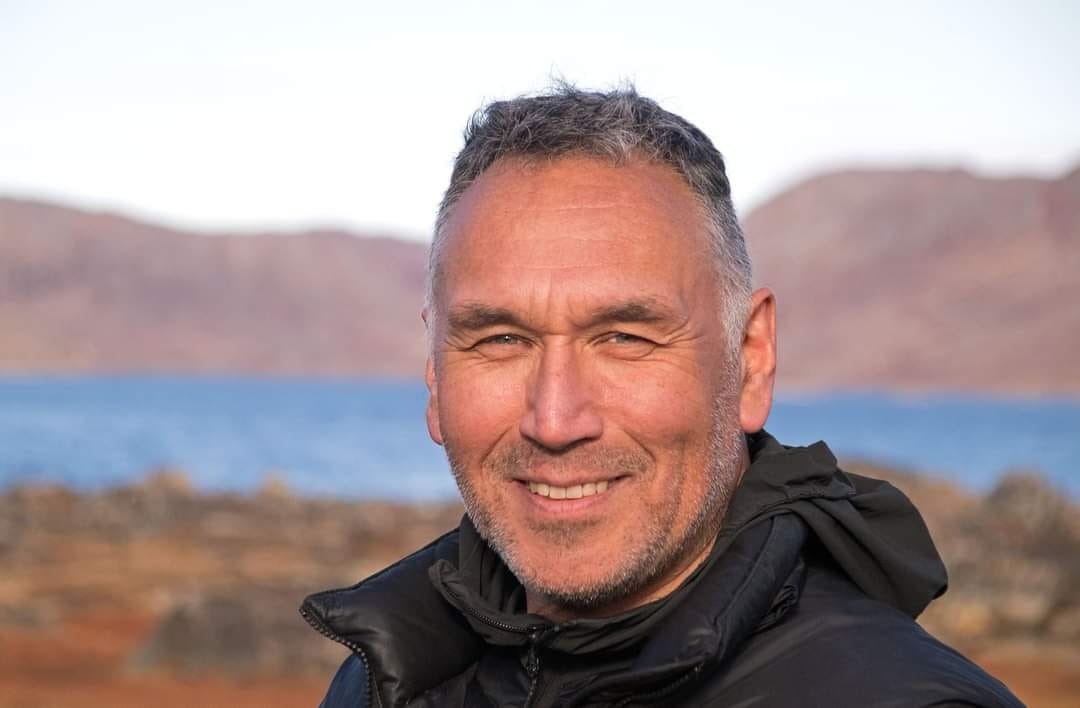
Allan Chemnitz talks about his path to being ordained as a monk in Thailand, about physical exertion and about gratitude for life.
Most Danes go to Thailand for vacation. I have done that many times too, because my wife is Thai. That is also what made me one day in 2007 to go to Wat Phra Dhammakaya in Juelsminde, Denmark. At that time I knew nothing about Buddhism, but my curiosity was piqued when I was introduced to meditation.
It has changed me for the better in a number of ways. Early on, I set out to learn about the depth and breadth of Buddhism. In that process, the abbot of the temple, Luang Phi Phrakongsak, has been an invaluable teacher to me, but I have also researched the web. In that process, I have even written a blog about my evolving understanding.
Young men become monks for a period of time as part of their personal development. The goal is to give them healthy values in life. Perhaps the most important reason is to show gratitude to one’s parents. The result is good deeds that contribute to a peaceful society.
The trip goes to Thailand (Turen går til Thailand)
When it became possible to be a monk for a period in Denmark, I signed up. It was a great experience. In that connection, I learned that it is possible to undergo a more intensive program in the main temple in Bangkok.
Therefore, I signed up for the International Dhammadayada Ordination Program (abbreviated IDOP). I was to be a monk for a month - April 7 to May 6, 2012. Wat Phra Dhammakaya is located north of Bangkok, more precisely in Pathum Thani. The decision was made. I was on my way to Thailand.
Being a monk requires strong physique (At være munk kræver stærk fysik)
The first step is that you undergo a health check by a Thai doctor. You are registered and interviewed. Everything is new. It is all well organized and takes place under orderly conditions.
All your belongings are taken from you, and for the next month or so you undergo something that in many ways resembles military training with strict discipline and a program that lasted from 4:30 AM to 10:00 PM at night, when the lights are turned off.
It is recommended that during the time we are monks, we practice yoga and stretch to keep ourselves flexible. This is not just good advice. It is a necessity. The challenges that will come in the coming time are not only of a mental nature. It is also very important that one's physique is in order.
I discover this, and especially a former American marine who started on the same team as me. Along the way he has to give up. It is too hard on his knees and especially his back. The many hours on his knees on the hard floor is a big challenge for us from the West, who are used to the easy life.
Cultures meet (Kulturer mødes)
A clean mind makes for a clean environment. It is repeated over and over again. It doesn't take long before we learn to cooperate. I am in the oldest group, around 50 years old. We come from all over the world.
Others are from England, Singapore, India, Japan, New Zealand and the USA, among others. There is also a group of young Thais who are very well-disciplined. They are good at supporting the rest of us. There are also two monks from Bhutan who are here to learn about Theravada Buddhism and the way Wat Phra Dhammakaya in Thailand is organized.
Over the next several days we will receive detailed instruction in basic Buddhism. About the Buddha's birth, life, questions and teachings up to his enlightenment. We prepare for the things we will be able to recite for our ordination.
As a monk, one is grateful and abstemious (Som munk er man taknemmelig og afholdende)
As monks, we must show care and consideration in everything we do. The food is donated by lay people who have worked hard so that we could eat the meal. Therefore, we must not overeat. This also applies to everything else we do. Once again, we are reminded of the great responsibility that is being a monk.
We only eat breakfast and dinner. The rest of the day we get what is called Pana. That is, juice and liquid dairy products without additives. It was something I had feared. It turned out to be no problem. Within three days I had gotten used to it.
Monks are role models (Munke er rollemodeller)
People need role models who are worthy of imitation. When you become a monk, you are automatically a role model the moment you put on your orange robe.
It is a huge responsibility. You step forward and surrender your life for a while or for your entire life to complete what the Buddha began. He was the greatest role model because he trained himself over many lives to achieve perfection by freeing himself from suffering.
I have become a better person (Jeg er blevet et bedre menneske)
My time as a monk has given me the results I had hoped for. The purpose of being ordained is to work more with my inner values, to remove the impurities and unnecessary 'edges' that I have in my life.
There are so many things in life that we take for granted when we live in freedom. Often we do not appreciate the opportunities we have in our part of the world, and we become ungrateful despite the fact that we have everything and have every opportunity to have a happy life.
My mind has been moved in the time that has followed. I have learned to understand the seriousness of being a monk. It has nothing to do with me, but with the rest of society. When you get ordained as a monk, it is not just something you do for fun, but to become a better person.
The moment you put on your monk's robes, you are a holy man. Your work is sacred, and you are in a position where you can give people hope and a greater meaning to life.
I am returning home, not only with a few experiences richer, but as a richer person in a mental sense.
Allan Chemnitz is a product manager and lay Buddhist. His blog is about meditation and Buddhism.
This article was translated from Danish. Click here to read the original article.